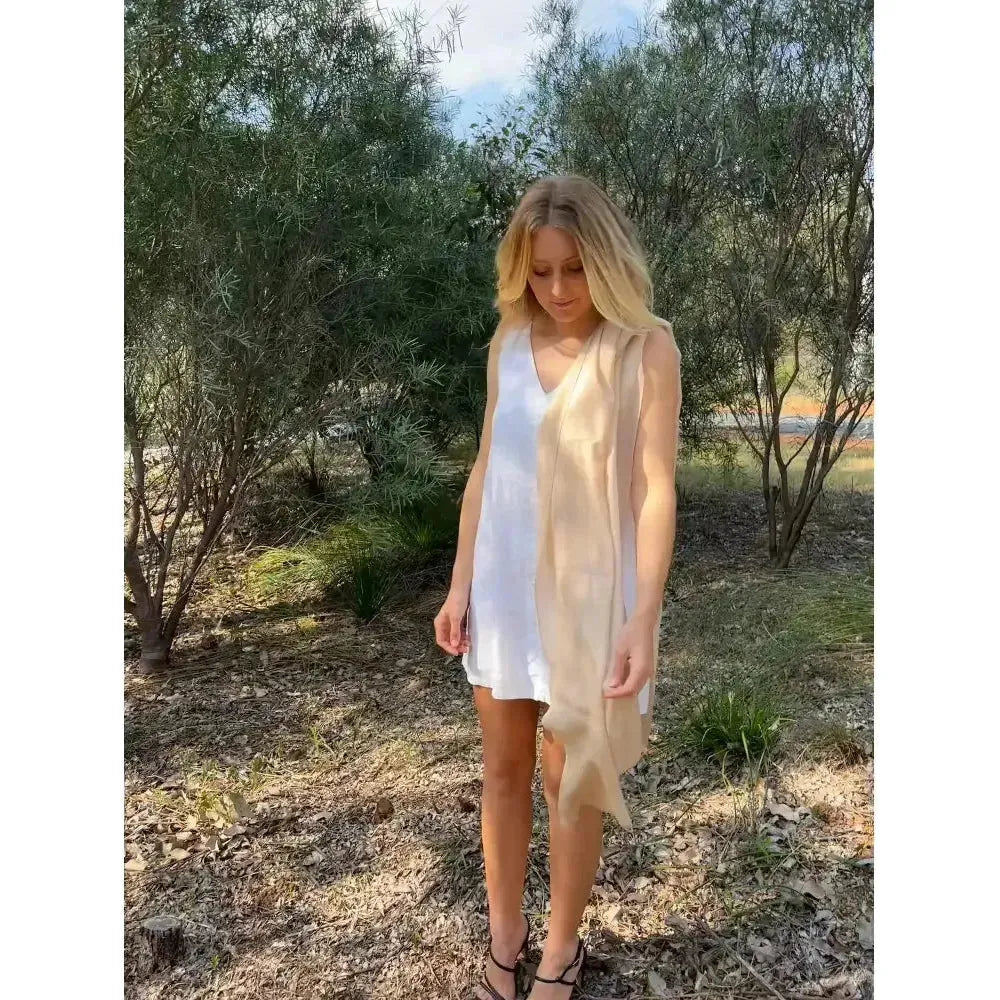

How to Style a Silk Scarf for Formal Events
Table of Contents
- What You'll Need Before You Start
- The Classic Neck Knot: Your Foundation Technique
- Best Silk Scarf Knots for Evening Wear
- How to Wear a Scarf with a Formal Dress
- Draping Techniques for Formal Occasions
- Styling Scarves as Shawls and Wraps
- Fabric Care and Preservation for Formal Wear
- Common Mistakes to Avoid
- Frequently Asked Questions
Last Updated: September 3, 2026
What You'll Need Before You Start
Styling a silk scarf for formal events requires more than just the scarf itself. Before you begin, gather a few essentials that will make the difference between an elegant look and a rushed one.
First, you'll need a quality silk scarf. The fabric matters enormously for formal occasions. Silk drapes beautifully, catches light in sophisticated ways, and moves with elegance that synthetic materials simply cannot replicate (peer-reviewed research). At Scarves Australia, our collection includes pieces specifically designed for evening wear, from lightweight silk blends to pure cashmere wraps that elevate any formal outfit.
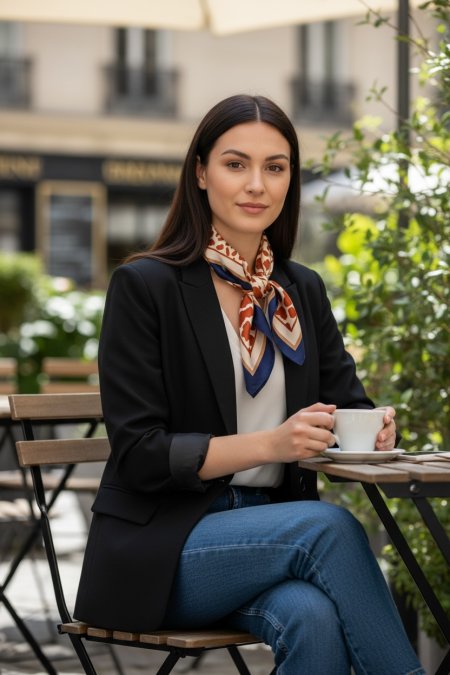
Navy Rust Square Scarf - Silk Feel Square
You'll also want a mirror large enough to see your full neckline and shoulders. Formal styling is about proportion, and you need to see how the scarf interacts with your overall silhouette. A full-length mirror is ideal, but at minimum, position yourself where you can see from the collarbone up.
Have bobby pins or a small clip on hand. While not always necessary, these help secure knots and prevent slipping throughout the evening. For more structured drapes, a small safety pin hidden inside the fold keeps everything in place without showing.
Finally, consider your outfit first. The way you style your scarf depends entirely on what you're wearing. Know your neckline, the formality level of your event, and whether you're aiming for understated elegance or a statement look. This foundation determines which styling technique will work best.
The Classic Neck Knot: Your Foundation Technique
The classic neck knot is the most versatile and forgiving method for how to style a silk scarf for formal events. It works with nearly every neckline and dress style, making it the technique every person should master before attempting more complex arrangements.
Step-by-step tying instructions
Start with your scarf folded into a triangle. Drape it around your neck with the long point hanging down your back and the two top corners in front. Cross the right corner over the left, then wrap it around the back of your neck. Bring it back to the front and tuck it through the loop you've created. Pull gently to tighten, then adjust so the knot sits at the base of your throat.
The key is tension. Too loose and the scarf slips throughout the evening. Too tight and you'll feel restricted and look uncomfortable. Aim for snug enough that the knot won't move, but loose enough that you can fit one finger underneath comfortably (advice on comfort and safety in clothing).
Practice this once or twice before your event. The motion becomes automatic, and you'll develop a feel for the right tension.
Adjusting for different necklines
How to style a silk scarf for formal events changes based on your neckline. For strapless or sweetheart necklines, tie the knot slightly lower, just at the collarbone. This prevents the scarf from competing with the dress's neckline.
With high necklines like turtlenecks or mandarin collars, position the knot higher, closer to your chin. This creates visual balance and prevents the scarf from bunching awkwardly against the dress fabric.
For V-necklines, the classic knot sits naturally at the V point. This is where the technique feels most effortless. The scarf echoes the line of the neckline, creating a cohesive look.
With boat necks or wide necklines, you have more flexibility. Position the knot slightly off-centre for visual interest, or keep it centred for a more formal, structured appearance.
Best Silk Scarf Knots for Evening Wear
Evening wear demands sophistication, and your scarf styling should reflect that.
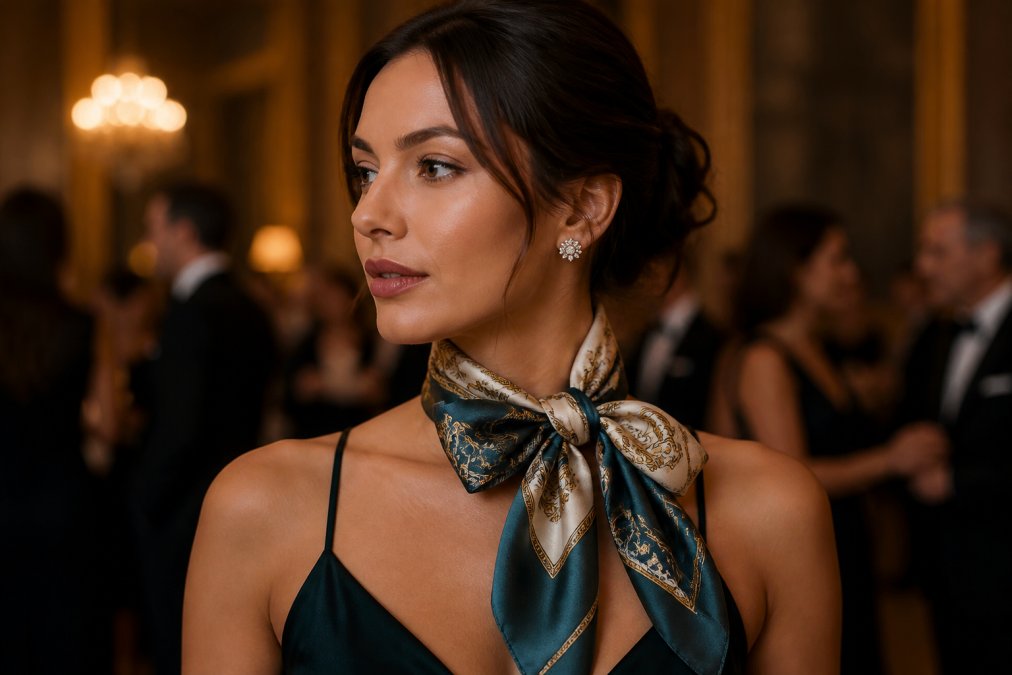
The bow variation
The bow is formal, feminine, and instantly elevates any outfit. Fold your scarf into a triangle and drape it around your neck. Instead of crossing one corner over the other, bring both corners to the front and tie them in a bow at the base of your throat.
The beauty of this method lies in its flexibility. A tight, structured bow reads as classic and tailored. A looser, more fluid bow feels romantic and modern. For black-tie events, keep the bow crisp and symmetrical. For cocktail events, allow it to be slightly undone for a contemporary feel.
Position the bow's centre at your collarbone for most necklines. If you're wearing a plunging neckline, move the bow slightly higher to maintain appropriate coverage. The bow should feel intentional, not accidental.
The asymmetrical drape
For those seeking something unexpected, the asymmetrical drape offers elegance without rigidity. Drape your scarf around your neck with one side significantly longer than the other. Let the longer end fall diagonally across your chest, then tuck it into your dress or secure it with a small pin at your waist.
This technique works beautifully with formal dresses that have interesting side details or asymmetrical cuts. It also suits smaller frames well, as it creates vertical lines that elongate the silhouette.
The asymmetrical drape requires confidence. It's not a technique you see everywhere, which means it makes a statement. Pair it with understated jewellery and let the scarf be the focal point of your styling.
How to Wear a Scarf with a Formal Dress
The relationship between your scarf and your dress determines whether you achieve elegance or visual chaos. Understanding this relationship is essential for how to style a silk scarf for formal events successfully.
Pairing with different dress styles
With a maxi dress, your scarf options expand significantly. A lightweight silk scarf works beautifully as a wrap around the shoulders, draping elegantly down the back. Alternatively, tie it at the neck using the classic knot. The length of the maxi dress means the scarf becomes part of a longer visual line, creating sophistication through proportion.
For shirtdresses worn formally, treat the scarf as you would with a blouse. A classic neck knot works perfectly, or try the bow variation for added formality. The structured nature of a shirtdress can handle a more defined, crisp scarf styling.
With a kaftan or loose-fitting formal dress, an asymmetrical drape or a simple wrap works best. Avoid tight knots that create bulk against the dress fabric. Instead, let the scarf flow, complementing the dress's natural movement.
For fitted formal dresses, keep your scarf styling simple. A classic knot or bow is ideal. Complex draping can overwhelm a fitted silhouette and create unflattering visual weight at the neckline.
Proportion and body type styling
If you're petite, avoid oversized scarves that will overwhelm your frame. Opt for lightweight silk scarves and keep knots and drapes close to your neck. Avoid letting the scarf extend too far down your body, as this shortens your visual line.
For taller frames, you have more flexibility. Longer drapes, asymmetrical styling, and wraps all work well. You can carry volume and length without appearing lost in the fabric.
If you carry weight in your chest or shoulders, avoid tight knots that draw attention to the neckline. Instead, use a scarf as a wrap or shawl, draping it loosely. This creates a flattering line without adding bulk.
For broader shoulders, a simple neck knot works beautifully. It doesn't compete with your shoulder line and creates balance through simplicity.
Draping Techniques for Formal Occasions
Draping is where scarf styling becomes an art form. These techniques move beyond knots into more flowing, elegant presentations ideal for formal events.
The kerchief drape for elegance
The kerchief drape is timeless and works for nearly every body type and dress style. Fold your scarf into a triangle, then drape it around your shoulders with the point down your back. Bring the two top corners to the front and tie them gently at your chest or let them hang loose for a more relaxed feel.
This technique works particularly well with formal dresses that have exposed shoulders or low backs. It adds coverage without the formality of a structured wrap. The kerchief drape feels effortless, which is precisely why it reads as elegant.
For evening events, secure the kerchief with a brooch at the chest for added sophistication. This prevents it from slipping and adds a jewellery element to your styling.
The diagonal fold method
The diagonal fold creates clean lines and a structured appearance ideal for formal events. Fold your scarf in half diagonally to create a long rectangle. Drape it around your neck with one end longer than the other. Cross the longer end over your body and tuck it into the opposite side of your dress or secure it with a pin.
This method works beautifully with tailored formal wear. The clean lines complement structured dresses and create a polished, intentional look. The diagonal fold also works well for those who prefer their accessories to stay in place throughout an event.
Practice this technique a few times to find the right balance of length and tension. Once you master it, you'll have a go-to styling method that works for multiple occasions.
Styling Scarves as Shawls and Wraps
Sometimes the most elegant way to incorporate a scarf into formal wear is to use it as a shawl or wrap. This approach is particularly practical for outdoor events or venues with unpredictable temperature.
A lightweight silk scarf can be draped loosely over your shoulders, creating an elegant wrap that adds sophistication without weight. For this styling, choose a scarf with beautiful edges or fringe, as these details will be visible and contribute to the overall look.
For evening events, a larger scarf or a cashmere blend works beautifully as a wrap. Drape it across your shoulders and let it fall naturally down your back. This creates an elongated silhouette and adds a layer of elegance that feels intentional rather than functional.
When using a scarf as a wrap, pay attention to colour coordination. The wrap becomes a significant visual element, so it should either complement your dress harmoniously or create a deliberate contrast. Neutral wraps work with any formal dress, while coloured scarves should coordinate with your overall palette.
The wrap approach also works beautifully for formal events where you'll be moving between indoor and outdoor spaces. A silk scarf provides enough warmth for mild evenings while maintaining your formal aesthetic.
Fabric Care and Preservation for Formal Wear
A beautiful silk scarf is an investment, and proper care ensures it remains elegant for years of formal events. Understanding how to care for your scarf extends its life and maintains its appearance.
Silk requires gentle handling. Always hand wash your scarf in cool water with a mild detergent designed for delicate fabrics. Avoid wringing or twisting. Instead, gently squeeze out excess water and rinse thoroughly until the water runs clear.
Dry your scarf flat on a clean towel or hang it in a well-ventilated area away from direct sunlight. Never use a dryer or apply heat. Silk is sensitive to temperature extremes, and heat can damage the fibres permanently.
Store your scarf carefully. Fold it loosely and place it in a drawer with acid-free tissue paper. Avoid hanging scarves long-term, as this can stretch the fabric over time. Keep scarves away from direct sunlight, which can fade colours.
For cashmere blends, the care is similar but slightly more delicate. These scarves benefit from occasional professional dry cleaning, which preserves the fabric's softness and appearance. Between cleanings, gentle hand washing works well.
If your scarf develops wrinkles, use a cool iron on the silk setting, or hang it in a steamy bathroom to allow moisture to relax the fibres. Never apply direct heat to the fabric.
Common Mistakes to Avoid
Even experienced stylists make mistakes when how to style a silk scarf for formal events. Knowing what to avoid prevents these common pitfalls.
The most common mistake is choosing the wrong size scarf for your frame. An oversized scarf overwhelms petite frames, while a tiny scarf looks lost on taller bodies. Before purchasing, consider how the scarf's dimensions will interact with your proportions.
Avoid over-securing your scarf. Safety pins, clips, and tight knots can damage delicate silk and create visible fasteners that break the elegant line. Instead, learn to tie knots that hold naturally through proper tension.
Don't match your scarf colour too closely to your dress. A scarf that blends completely with your dress becomes invisible, defeating the purpose of wearing it. Either choose a complementary colour or a neutral that creates contrast.
Avoid wearing scarves that are visibly stained, wrinkled, or damaged to formal events. A scarf in poor condition detracts from your entire look. Inspect your scarf before the event and address any issues.
Never tie knots too tightly. This restricts movement, creates visible tension lines in the fabric, and makes you feel uncomfortable throughout the evening. Proper tension allows the scarf to move with you naturally.
Avoid experimenting with new styling techniques immediately before a formal event. Practice your chosen method at least once beforehand. This builds confidence and ensures you know exactly how the scarf will sit and move.
When you're preparing for a formal event, the right scarf transforms your outfit from ordinary to memorable. At Scarves Australia, our collection of silk scarves and cashmere wraps gives you access to fabrics that drape beautifully and hold their elegance throughout the evening. Whether you choose our Luxury Pure Cashmere Shawl in Pearl White for classic sophistication or our Jet Black Luxury Stole for dramatic impact, you'll have a piece that elevates every formal occasion. Explore our range today and discover how the right accessory makes all the difference.

Frequently Asked Questions
How do I keep a silk scarf in place during a formal event?
Use a silk scarf pin or brooch to anchor your knot at the base of the neck, or secure the tail with a small stitch if you're wearing the same scarf repeatedly. For shawl-style draping, ensure the fabric sits evenly across your shoulders and use the weight of the silk itself to maintain the fold. A lightweight cashmere silk blend like our Luxury Shawl in Off White Alabaster holds its shape beautifully without constant adjustment throughout the evening.
What size silk scarf works best for formal wear?
For neck knots and evening styles, a square scarf measuring approximately 90 centimetres is ideal. For shawl draping and wrapping around the shoulders, larger rectangular scarves or stoles (around 180 by 70 centimetres) provide better coverage and a more elegant silhouette. Consider your frame: petite figures suit smaller squares, while taller builds can carry oversized wraps effectively.
Can I wear a silk scarf with any formal dress?
Silk scarves work with most formal dresses, but choose styles that complement your neckline. High necklines pair better with loosely draped scarves or shoulder wraps, while strapless or sweetheart necklines showcase tied knots beautifully. Avoid bulky knots with delicate fabrics; instead, opt for lightweight silk that creates texture without overwhelming your dress. Test the colour and drape against your dress before the event.
How do I choose a silk scarf that actually gets worn instead of sitting in my drawer?
Select neutral or jewel-tone silk scarves that coordinate with multiple formal outfits in your wardrobe. Invest in quality pieces like our Pure Cashmere Shawls that feel luxurious and justify regular use. Start with one versatile style (a classic cream or black stole) and master one or two knotting techniques before expanding your collection. Quality fabrics that drape beautifully and feel good against your skin encourage regular styling.