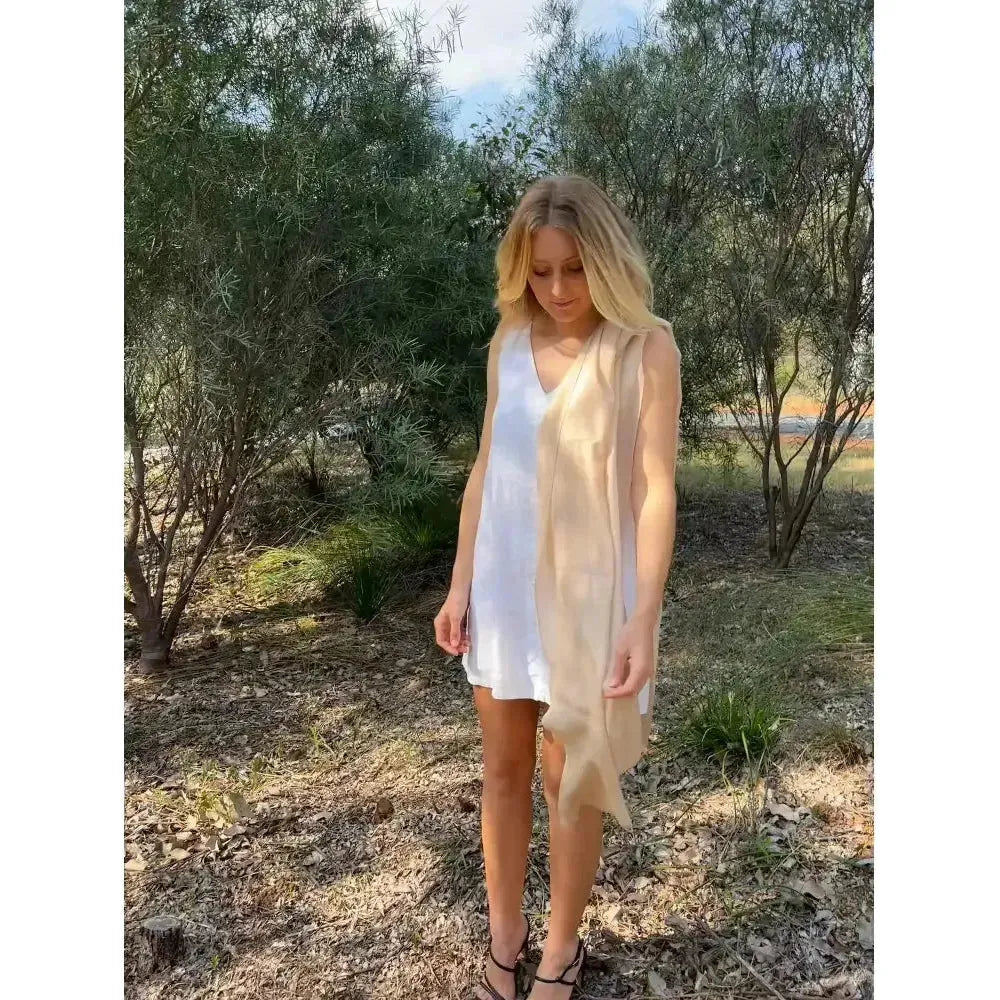

Best Scarf Colours for Every Skin Tone: 2026 Guide
Table of Contents
- How to Determine Skin Undertone Before You Buy
- Best Scarf Colours for Cool Skin Tones
- Best Scarf Colours for Warm Skin Tones
- Best Scarf Colours for Neutral and Deep Skin Tones
- Styling a Red Scarf for Winter
- Versatile Scarf Colours for Capsule Wardrobes
- Colours to Avoid (and What to Wear Instead)
- Conclusion
- Frequently Asked Questions
Last Updated: September 19, 2026
How to Determine Skin Undertone Before You Buy
Finding the best scarf colours for every skin tone starts with one question most shoppers never ask: what is my undertone? Undertone is the permanent hue beneath your skin's surface, and it stays the same whether you tan, burn or go pale in winter. Nine times out of ten, the colour clashes with their undertone, not their outfit.
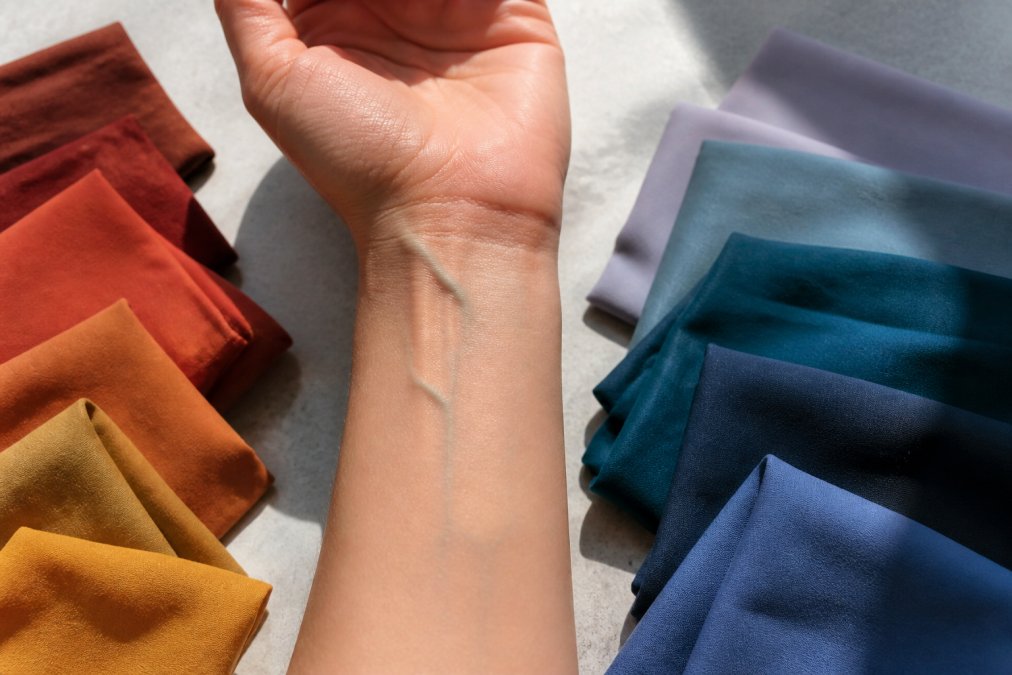
Diagram showing how to check wrist veins against fabric swatches to find your best scarf colours
Three Quick Tests You Can Do at Home
- Vein test: Look at the veins on your inner wrist in daylight. Blue or purple leans cool; green leans warm; a mix of both leans neutral.
- Jewellery test: Silver flatters cool undertones, gold flatters warm. If both work equally well, you're neutral.
- White paper test: Hold a plain white sheet near your bare face in natural light. If your skin looks pink or rosy against it, you're cool. If it looks yellow or golden, you're warm.
Why Lighting Changes the Answer
This is the step most guides skip, and it's the one that costs people money. Colour is not a fixed property of a scarf, it's the result of light bouncing off the fabric and then off your skin. Change the light, and you change the interaction.
- Natural daylight (mid-morning, indirect): the most accurate reference. This is the only condition where the vein, jewellery and paper tests give reliable results.
- Warm artificial light (incandescent, most fitting rooms): pushes every colour toward yellow-orange. A cool sapphire can read almost teal; a warm camel can look richer than it is. Warm undertones look flattered here; cool undertones look washed out.
- Cool artificial light (many office fluorescents and LED panels): pushes colours toward blue. Warm skin can look grey or sallow, and warm scarves lose their glow.
- Overcast daylight: relatively neutral but low-intensity, which flattens saturation and makes it hard to judge bold colours.
A Simple Decision Path
- Vein test first, it's the least subjective.
- Jewellery test second, it reflects how colour behaves against your face, not just your wrist.
- White paper test third, useful as a tiebreaker, but the most affected by ambient light.
One caveat before you shop: artificial light lies. Department store lighting skews warm, so a scarf that looks rich in the fitting room can read muddy at home. Check colours near a window before committing, and if you're shopping online, look for product photography shot in neutral daylight rather than studio lighting.
Best Scarf Colours for Cool Skin Tones
Cool undertones glow in colours with a blue or pink base. Think jewel tones and icy neutrals rather than anything golden or earthy.
Your strongest picks:
- Sapphire and cobalt blue
- Emerald and deep teal
- True red and berry
- Plum and violet
- Pure white, silver grey and charcoal
Jewel Tones and Icy Neutrals That Flatter
Jewel tones share one trait: high saturation with a cool base. That saturation creates colour contrast against your skin, which is why cool-toned people look more awake in emerald than in mustard. Icy neutrals work the same way at lower intensity. If you want a softer option, the Soft Pink Rose Pashmina Shawl ($119.00) sits in that cool pink family and flatters without shouting.


Best Scarf Colours for Warm Skin Tones
Warm undertones come alive in earth tones, golds and rich spices. Colours with a yellow, orange or red base harmonise with the natural glow in your skin rather than fighting it.
Build your palette around:
- Terracotta, rust and clay
- Olive and moss green
- Golden sand, camel and caramel
- Mustard and amber
- Warm reds and coral
Earth Tones, Golds and Rich Spices
Earth tones work because they echo the warmth already present in your skin, creating colour harmony rather than contrast. If you want a neutral that does everything, the Golden Sand Pashmina Shawl ($125.00) is our best-selling warm neutral for good reason: it layers over almost anything without competing. Pair warm scarves with gold jewellery and you'll see the difference immediately.
Best Scarf Colours for Neutral and Deep Skin Tones
Neutral undertones can wear almost anything, which sounds like a blessing until you're standing in front of a wall of colour with no filter. The trick is to lean into contrast. If your overall look is low-contrast, choose scarves close to your natural depth. If it's high-contrast, choose scarves that sit at the opposite end of the scale.
Styling a Red Scarf for Winter
A red scarf is the single most reliable way to break up a winter wardrobe of black, grey and navy. The catch is picking the right red. Cool undertones suit blue-based reds and berry shades; warm undertones suit orange-based reds and brick tones. Integrating these vibrant hues into a cohesive minimalist wardrobe color palette ensures that your chosen red remains a versatile focal point rather than an isolated accessory.
For styling, keep it simple:
- Drape it long over a black coat for maximum contrast.
- Wrap once and let the ends hang for a softer, everyday look.
- Belt a pashmina over a knit for a structured, layered silhouette.
- Pair with denim and a white shirt for weekend wear.
Versatile Scarf Colours for Capsule Wardrobes
Capsule wardrobes live or die on versatility, and scarves are the cheapest way to multiply a small wardrobe. A scarf changes the perceived colour of an outfit without changing the outfit itself, which means one well-chosen piece can make a single black dress read as three different looks across a week.
Black Pashmina Shawl- Classic Scarf →
How Many Scarves Does a Capsule Actually Need?
For a wardrobe of roughly 30 to 40 core pieces, three scarves cover the vast majority of situations:
- One true neutral (navy, charcoal, camel or true white) for everyday wear and professional settings.
- One second neutral in the opposite temperature to your first, if your first is cool (navy), make the second warm (camel or sand). This gives you coverage across seasons and lighting conditions.
- One accent in a colour that flatters your undertone and appears nowhere else in your wardrobe. This is the piece that makes people ask where you got it.
The Versatility Matrix
Scarf Colour |
Undertone Match |
Pairs With |
|---|---|---|
Golden Sand |
Warm, neutral |
White, black, denim, earth tones |
Navy Blue |
Cool, neutral |
Grey, camel, white, charcoal |
True White |
Cool, neutral |
Nearly every colour |
Terracotta Clay |
Warm, neutral |
Cream, olive, chocolate, navy |
Cobalt Blue |
Cool, neutral |
Black, white, denim, silver |
The Navy Blue Pashmina Scarf ($79.00) is the workhorse of this approach. Navy reads professional, flatters nearly every complexion, and transitions from office to evening without a second thought. Add the True Bright White Pashmina Shawl ($125.00) for weddings and summer events, and you've covered most of the calendar with two purchases.

Pashmina Scarf Navy Blue Plain Shawl
Sequencing Your Purchases
Buy in this order to avoid dead weight in your drawer:
- Neutral first. Wear it for a fortnight. If you reach for it more than three times a week, your instinct for the second purchase will be sharper.
- Opposite-temperature neutral second. This is the piece that covers the seasons your first scarf doesn't.
- Accent last. By this point you'll know exactly which colour is missing from your rotation, rather than guessing.
What a Scarf Replaces
A scarf is not just an accessory, in a capsule it substitutes for several others. A large pashmina can stand in for a statement necklace (it frames the face the way jewellery does), a light cardigan (draped over the shoulders), and a travel blanket. That's three functions from one purchase, which is why scarves earn their place in a limited wardrobe more easily than almost any other item.
Colours to Avoid (and What to Wear Instead)
Very few colours are truly off-limits, but some create unnecessary work. The fastest way to waste money on scarves is buying shades that fight your undertone.
Problem Colour |
Who It Fights |
Wear Instead |
|---|---|---|
Mustard and ochre |
Cool undertones |
Emerald or sapphire |
Icy pastels |
Warm undertones |
Clay, sand, coral |
Stark orange |
Cool undertones |
Berry or true red |
Washed-out beige |
Deep complexions |
Camel, cobalt, pure white |
Neon brights |
Most undertones |
Saturated jewel tones |
Conclusion
The gap between a scarf that sits in a drawer and one you reach for daily usually comes down to a single decision: matching colour temperature to your undertone. Cool tones want jewel tones and icy neutrals, warm tones want earth tones and golds, and neutral or deep complexions can carry strong contrast. Once you know your undertone, choosing becomes quick, and every scarf you buy earns its place.
Frequently Asked Questions
What colour scarf goes with everything?
A black pashmina is the most universally versatile choice, pairing with neutrals, monochrome outfits, denim and winter whites. For a softer option, a warm neutral like Golden Sand works across whites, blacks, earthy tones and prints. If you want one scarf that works for day and evening, a mid-weight plain pashmina in black or sand covers the widest range of outfits and occasions.
How do I determine my skin undertone for fashion choices?
Check the veins on your inner wrist in natural daylight. Blue or purple veins suggest a cool undertone, green veins point to warm, and a mix of both indicates neutral. You can also hold silver and gold jewellery near your face: silver flatters cool undertones, gold suits warm, and both work for neutral. Knowing your undertone helps you pick scarf colours that bring out skin radiance rather than washing you out.
Which scarf colours best complement cool skin tones?
Cool skin tones suit jewel tones and icy neutrals. Cobalt blue, deep green, true white, fuchsia and soft rose pink all bring out natural colour without competing with it. A Dazzling Cobalt Blue pashmina adds vibrancy to neutral outfits, while a True Bright White shawl works beautifully for weddings and summer events. Avoid orange-based tones, which can make cool complexions look tired.
Are there specific scarf colours that suit warm skin tones?
Warm skin tones look best in earth tones, golds and rich spices. Golden Sand, terracotta clay, olive, camel and warm reds all enhance a golden or peachy undertone. The Clay Terracotta Pashmina sits between blush and warm terracotta, making it an easy neutral for warm complexions. Skip icy pastels and blue-based pinks, which can dull warm skin.
How can I incorporate a red scarf into my seasonal wardrobe?
A red scarf works hardest in winter, layered over black, navy, grey or camel coats for a bold focal point. Drape it loosely over a neutral knit for daytime, or wrap it close to the neck for warmth on cool evenings. If bright red feels too bold, a deep burgundy or terracotta red gives the same warmth with less contrast. Red also lifts an all-black outfit instantly.
What are the best scarf fabrics for different Australian climates?
A mid-weight 200g pashmina is a good year-round option for most climates, folding compactly for travel and layering easily from autumn through early spring.