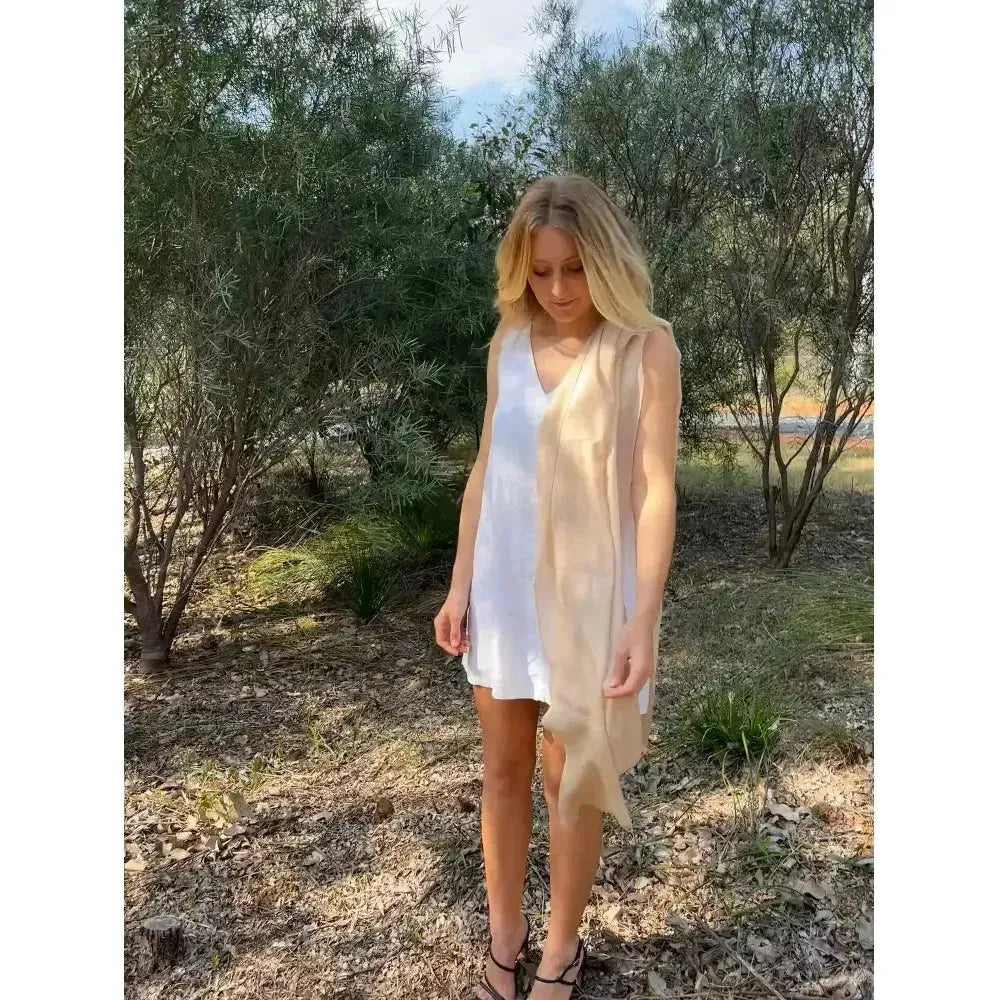

Benefits of Wearing Merino Wool Accessories Year-Round
Last Updated: November 4, 2026
Quick Summary
Merino wool accessories regulate temperature, wick moisture and resist odour, so one scarf or wrap works across cold mornings, heated offices and cool evenings. The fine fibre stays soft against the neck and packs small, making these pieces genuinely year-round rather than winter-only.
- Choose fibre below roughly 20 microns for softness against the neck; 17-19 microns suits scarves.
- A tightly knitted mid-weight scarf often outperforms a loose bulky one because trapped air stays put.
- Merino is more durable, more breathable and easier to care for than cashmere, which pills more readily.
- Hand wash in cool water with wool-specific detergent, squeeze gently and lay flat to dry.
- Fine wool scarves and shawls in the collection are priced from $149 to $189.
Table of Contents
- Why Merino Wool Accessories Earn Their Place in Your Wardrobe
- The Core Benefits of Wearing Merino Wool Accessories
- Merino Wool Scarf Benefits: Softness, Warmth and Lightweight Comfort
- Choosing Accessories by Activity, Climate and Fibre Weight
- Merino Wool vs Cashmere Scarf: Which Fibre Suits You
- How to Wash a Merino Wool Scarf and Keep It Wearing Well
- The Trade-Offs: Pilling, Durability and What Merino Won't Do
- Find Your Merino Piece in the Scarves Australia Collection
- Frequently Asked Questions
Why Merino Wool Accessories Earn Their Place in Your Wardrobe
Merino wool accessories solve a problem most wardrobes never fix: the gap between "too warm" and "not warm enough." People often buy a heavy synthetic scarf for winter, wear it twice, then leave it in a drawer because it overheats on the train and itches against the neck. Merino behaves differently.
Merino wool is a fine natural fibre spun from the fleece of Merino sheep, prized for its softness, breathability and ability to regulate temperature across many conditions. (Wool Fibre Properties, Facts & Benefits) Unlike bulky wool, the fine fibre structure keeps the fabric light enough to drape well and warm enough to matter.
The benefits of wearing merino wool accessories come down to how the fibre handles moisture, heat and odour at once. Below, we break down what that means for scarves, wraps and shawls, and how to choose by climate and activity.
The Core Benefits of Wearing Merino Wool Accessories
Temperature Regulation and Thermoregulation
Thermoregulation is merino's headline act. The fibre traps air in its crimped structure, holding warmth close while letting excess heat escape. That means one scarf can handle a cold morning, a heated office and a cool evening without a change.
For anyone who moves between air-conditioned spaces and outdoor air, this matters more than raw warmth. A merino scarf works as a layer you adjust, not a coat you commit to. If you want lightweight warmth for warmer weather events, see our lightweight scarves for summer weddings.
Moisture-Wicking, Breathability and Odour Resistance
Wool fibre absorbs moisture vapour before it feels damp on the skin. Merino can take up moisture and still feel comfortable against the skin.
Breathability keeps air moving through the fabric, so you do not get that clammy build-up synthetics are known for.
Merino Wool Scarf Benefits: Softness, Warmth and Lightweight Comfort
Warmth without weight is the second draw. A fine merino scarf traps heat but folds into a handbag, making it a genuine travel piece rather than a winter-only item. If you like soft, lightweight styling, our floral shawls style guide shows how to wear these pieces across seasons.
Choosing Accessories by Activity, Climate and Fibre Weight
Match the fibre weight to the job, not the calendar. The variables that actually change how an accessory performs are fibre fineness (micron), fabric weight (grams per square metre), knit or weave density, and how much skin the piece covers.
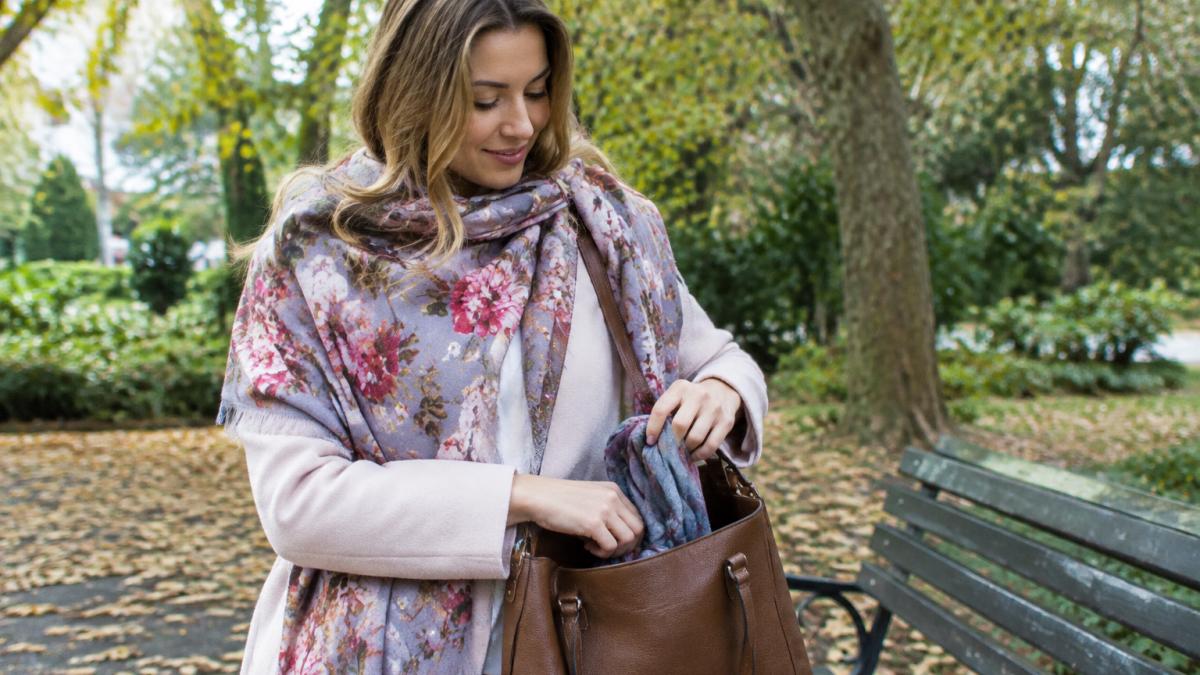
Fibre fineness. Micron describes fibre diameter. Below roughly 20 microns, merino feels soft enough for most people to wear against the neck; finer still (around 17-19 microns) is the usual choice for scarves and neckwear worn directly on skin. Coarser fibre is stronger and cheaper but pricks more, which is why it belongs in outer layers rather than next-to-skin accessories.
Fabric weight and knit density. A light single-jersey knit drapes and packs small but lets more air through. A denser rib, interlock or twill holds more warmth per square centimetre and resists wind better, at the cost of bulk. For accessories, weight matters more than thickness alone: a tightly knitted mid-weight scarf often outperforms a loose bulky one because trapped air stays put.
Coverage. Socks, hats, gloves, scarves and neckwear expose different amounts of skin and meet different friction. A neck gaiter seals the gap between collar and jaw; a scarf can be loosened for airflow; a hat loses most of its value if it does not cover the ears. Choose coverage first, then weight.
Use this starting point:
Pure Fine Wool Scarf Floral - Teal Scarf Shawl →
| Activity or climate | Fibre weight | Best accessory | Why it works |
|---|---|---|---|
| Travel and flights | Fine, lightweight | Scarf or travel wrap | Folds small, adjusts to changing temperatures |
| Hiking and outdoor | Mid-weight knit | Neck gaiter or scarf | Manages sweat and resists odour |
| Cool evenings out | Fine twill | Shawl or wrap | Drapes elegantly, adds warmth |
| Warm days | Lightweight fine | Light scarf | Breathes without overheating |
| Cold, windy commutes | Mid-weight, dense knit | Close-fitting scarf or neckwear | Blocks wind, traps air, covers the neck gap |
| Variable spring/autumn | Fine to mid-weight | Scarf worn loose or doubled | Adjustable warmth without a second layer |
Accessory-by-accessory notes. Scarves and wraps can afford the finest, softest fibre because they meet less friction.
To compare fibre options side by side, browse scarves by material.
Merino Wool vs Cashmere Scarf: Which Fibre Suits You
Both are natural, warm and soft, but they behave differently. Merino is more durable, more breathable and easier to care for. Cashmere is softer to the touch and lighter still, but it pills more readily and costs more to maintain.
Choose merino if you want daily wear, travel and low-fuss care. Choose cashmere if softness is your priority and you are happy with gentler handling. For most wardrobes, merino delivers more wear per dollar.
How to Wash a Merino Wool Scarf and Keep It Wearing Well
Hand washing is a gentle route. Use cool water and a wool-specific detergent, then gently squeeze rather than wring. Lay flat to dry away from direct sunlight and avoid tumble drying.
- Check the care label first, every time
- Turn the scarf inside out before washing
- Avoid fabric softener, which coats the fibre
- Fold rather than hang to keep the shape
The Trade-Offs: Pilling, Durability and What Merino Won't Do
Merino is not indestructible. Friction under bag straps and seatbelts causes pilling, and fine fibres abrade faster than coarse ones. A fabric comb handles most of it.
Merino also will not replace a waterproof shell in heavy rain, and it is not the cheapest option up front. What it does offer is durability through careful care, natural renewal as a fibre, and comfort that holds up across seasons.
Find Your Merino Piece in the Scarves Australia Collection
The right merino accessory is the one you actually reach for. Start with a versatile neutral, then add colour once you know how you wear it.
Our fine wool collection includes handmade pure fine wool scarves and shawls in floral, block print and ombré designs, priced from $149 to $189, with generous sizing for scarf, shawl or wrap styling.
Browse the collection, choose a colour that works with what you already own, and add one piece to your cart. You will know within a week whether it earns its place.
Frequently Asked Questions
Is merino wool comfortable to wear next to the skin?
Fine merino is comfortable against the skin because the fibres are measured in microns, and finer grades bend easily rather than prickle. A pure fine wool scarf draped at the neck or a lightweight wrap over the shoulders sits softly without bulk. If you are sensitive to wool, look for pieces described as fine or pure fine wool and wear them over a collared shirt first. Hand wash in cool water with a wool detergent to keep that softness.
Are merino wool scarves warm enough for winter?
Yes. Wool traps heat in the air between fibres, so a lightweight scarf keeps you warm without the weight of a heavy acrylic wrap. For colder climates, a pure wool twill shawl with a generous size gives more coverage across the shoulders and chest. Layer it over a coat for extra warmth on frosty mornings, then wear it open indoors. The same scarf works in spring and autumn because you can loosen it as the day warms.
How do you wash and care for merino wool accessories?
Check the care label first. If you hand wash, use cool water and a specialist wool detergent, squeeze gently without wringing, and lay flat to dry away from direct sunlight. Store folded in a clean, dry place.
Is merino wool better than cashmere for scarves?
It depends on what you want. Merino suits daily wear, travel and layering. Cashmere is softer to the touch. Many wardrobes benefit from both.