
How to Tie a Shawl: 7 Elegant Ways to Style Any Wrap
Table of Contents
- What You'll Need Before You Start
- How to Tie a Shawl: 7 Techniques That Stay Put
- How to Wear a Shawl With a Dress
- Pashmina Styling Tips for Every Season
- Best Professional Accessories for Office Outfits
- Fabric-Specific Styling: Matching Your Technique to Your Material
- Troubleshooting: How to Keep a Shawl From Slipping
- Conclusion
- Frequently Asked Questions
Last Updated: September 22, 2026
What You'll Need Before You Start
A shawl stays put when the fabric, the fold and the fastening all work together. Get those three right and you can wear the same wrap three different ways in a single day.
Here's what to have on hand before you learn how to tie a shawl:
- Your shawl or pashmina - wool blends hold a knot best, while lightweight cotton suits loose drapes
- A brooch or pin - the single most useful tool for securing a wrap
- A mirror - full-length if you have one, so you can check the back
- A plain top or dress - busy prints fight with patterned shawls
You do not need special clips or hidden straps. A pin and the right fold will do more than any gadget.
How to Tie a Shawl: 7 Techniques That Stay Put
These seven methods cover almost every situation, from a wedding to a supermarket run. Start with the classic drape, then add the others as you get comfortable.
| Technique | Best For | Difficulty | Needs a Pin? |
|---|---|---|---|
| Classic drape | Everyday wear | Easy | No |
| Cross-body wrap | Walking, travel | Easy | No |
| Shoulder wrap and knot | Formal events | Medium | Yes |
| Belted layer | Office outfits | Easy | No |
| One-shoulder style | Evening wear | Medium | Yes |
| Infinity loop | Cold days | Easy | No |
| Cape over shoulders | Weddings | Medium | Yes |
The Classic Drape
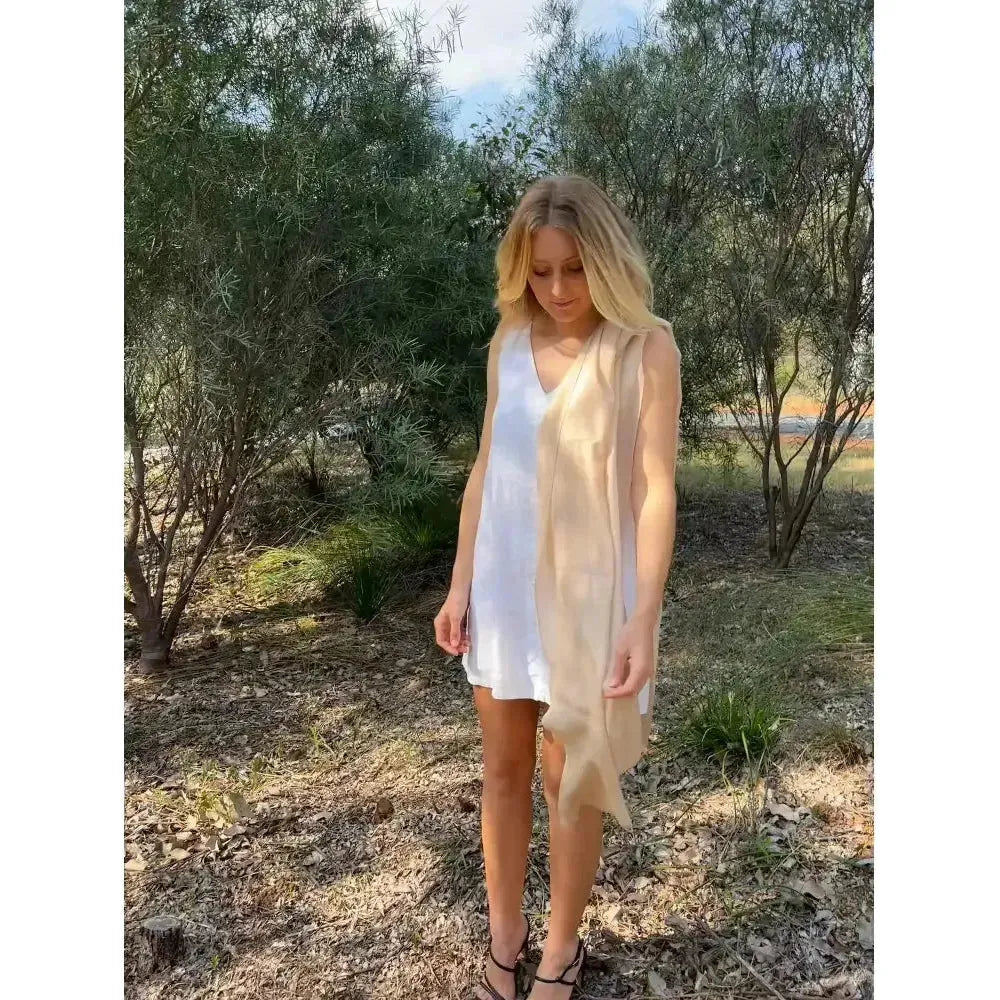
Fold the shawl in half lengthwise so it forms a long band. Drape it over both shoulders with the ends hanging evenly at the front. Let the fold sit softly at the back of your neck.
This is the fastest way to add colour to a plain outfit. It suits almost any fabric and needs no pin.
The Cross-Body Wrap
Hold the shawl behind your back and bring both ends forward over opposite shoulders. Cross them at your chest, then tuck the ends under the band across your body.
The diagonal line flatters most silhouettes and keeps your hands free. It works well for travel and busy days.
The Shoulder Wrap and Knot
Drape the shawl over one shoulder, leaving the other bare. Gather the fabric at your shoulder and tie a loose knot. Secure it with a brooch just below the knot.
This asymmetrical look reads as elegant without trying too hard. It's the technique most people reach for at evening events.
How to Wear a Shawl With a Dress
The best way to wear a shawl with a dress is to match the drape to the neckline. A deep V needs coverage at the front, while a high neckline can take a looser, off-the-shoulder wrap.
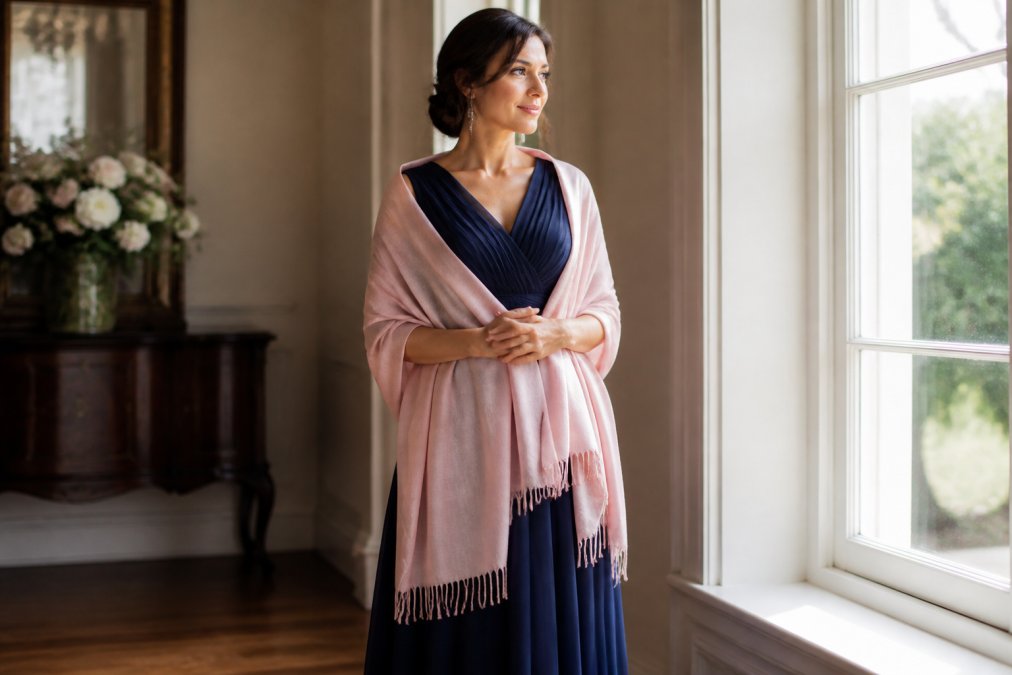
For a strapless or off-shoulder dress, wrap the shawl around your upper arms rather than your neck. This adds warmth without hiding the dress.
For a fitted cocktail dress, try the one-shoulder style. It creates a clean diagonal line that lengthens your silhouette.
A few quick rules:
- Match a fine dress with a fine weave, and a chunky knit with a heavier wrap
- Keep the shawl colour close to the dress for a sleek look, or contrast it for a pop
- Pin the shawl at the back if you plan to dance
Pashmina Styling Tips for Every Season
A pashmina is a versatile wrap, especially when you adapt its fold and weight to match the season. Most guides stop at 'wear it loosely in summer, tightly in winter'. Here are some suggestions for fabric weights and folds that suit each transition.
Summer (roughly 25°C and above).
Black Pashmina Shawl- Classic Scarf →
Go for a lightweight pashmina. Wear it loosely over the shoulders as a classic drape for air-conditioned offices and cool evenings, or knot it once at the front and let the ends fall. A single lightweight pin at one shoulder is enough to stop it sliding off a sleeveless dress.
Autumn and spring (roughly 15-24°C).
This is where the classic drape over a knit does the most work. A mid-weight wool-blend pashmina holds a fold without feeling heavy, and the cross-body wrap is ideal for days that start cool and warm up by lunchtime, you can loosen it without taking it off. Deep tones (wine, charcoal, forest) suit the cooler end of the season; softer shades (blush, stone, pale grey) feel right as it warms.
Winter (roughly 14°C and below).
Switch to a heavier wool or wool-blend pashmina and use the infinity loop or a doubled shoulder wrap close to the neck. Layer it under a coat rather than over, a fine pashmina adds warmth without adding bulk at the shoulders, which is why it works better than a chunky scarf under a tailored coat. If you wear it over a coat, use the cape-over-shoulders style and pin it at the front so it does not blow open.
The transition trick most people miss.
Keep two pashminas in rotation, not one: a fine weight for the warmer half of the year and a mid-to-heavy weight for the cooler half.
Best Professional Accessories for Office Outfits
Start with the fold that suits your frame.
- Petite frames (under about 160 cm): a long cross-body wrap can swamp the torso. Use the classic drape with the ends tucked just below the waist, or a belted layer cinched at the natural waist. Both create a vertical line rather than a horizontal block of fabric.
- Tall frames: the cross-body wrap and the one-shoulder style both work well because the diagonal has room to travel. A cape over the shoulders also reads as deliberate rather than oversized.
- Curvier silhouettes: an asymmetrical one-shoulder drape draws the eye diagonally and avoids adding bulk across the bust. Keep the knot high on the shoulder rather than at the centre of the chest.
- Broad shoulders: avoid a tight shoulder wrap that adds width. A loose classic drape or a belted layer that pulls focus to the waist balances the line.
- Narrow shoulders: the shoulder wrap and knot adds structure exactly where you want it, and a small brooch at the shoulder anchors the look.
The office accessory shortlist.
- A slim matte brooch in a neutral metal, small enough to read as jewellery, not hardware. Place it in a folded section of fabric, never a single layer, so it does not leave a hole.
- A thin leather or fabric belt to convert a draped wrap into a belted layer. This is the single most under-used office technique and it works on almost any body shape because it defines the waist.
- A second, lighter pin for slippery fabrics. Two small pins hold a silk wrap better than one heavy brooch and cause less damage.
- A structured bag in a matching tone is fine, but keep it neutral so the shawl stays the focal point.
Colour rules that actually hold up in an office.
Fabric-Specific Styling: Matching Your Technique to Your Material
Different fabrics behave in very different ways, and the wrong technique will undo even a beautiful shawl. Match the fold to the material and you'll fight it far less.
Troubleshooting: How to Keep a Shawl From Slipping
Slippage is the number one complaint about shawls, and it almost always comes down to three things: fabric, fold and fastening. Fix any one of them and the problem usually disappears.
Conclusion
Learning how to tie a shawl comes down to three things: the right fold, the right fabric and one good pin. Master the classic drape first, then add the cross-body and shoulder knot as you get comfortable.
Frequently Asked Questions
How do I keep a shawl from slipping off my shoulders?
The most reliable method is the cross-body wrap: bring one end over your shoulder and the other under your arm, then tie them at the back or side. This creates tension that holds the shawl in place. For extra security, use a decorative pin or brooch at the shoulder. Wool blend pashminas with a bit of texture grip better than smooth silks, so fabric choice matters as much as technique.
How do I tie a pashmina shawl for a formal event?
For formal occasions, try the classic drape: fold the pashmina in half lengthwise, place it across your back, and let both ends fall evenly in front. Pin the layers together at one shoulder with a brooch for an asymmetrical, elegant silhouette. A black pashmina works with almost any evening outfit, while a deep red wine shade adds a refined pop of colour to neutral dresses.
Can I tie a shawl into a dress or top?
Yes, a large shawl can become a makeshift top or dress overlay. Fold it into a triangle, position the point at your front, and bring the two ends around your neck to tie at the back. Adjust the drape to cover your desired neckline. This works best with generously sized wool blend or cashmere wraps that hold their shape without sagging.
What is the best way to tie a shawl for arm coverage?
The shoulder wrap method gives the most arm coverage. Open the shawl fully, drape it over both shoulders, and cross the ends over your chest, tucking them into a belt or knotting at the side. This keeps your arms covered while leaving your hands free. For extra warmth, layer a second lighter wrap underneath in a contrasting shade.